
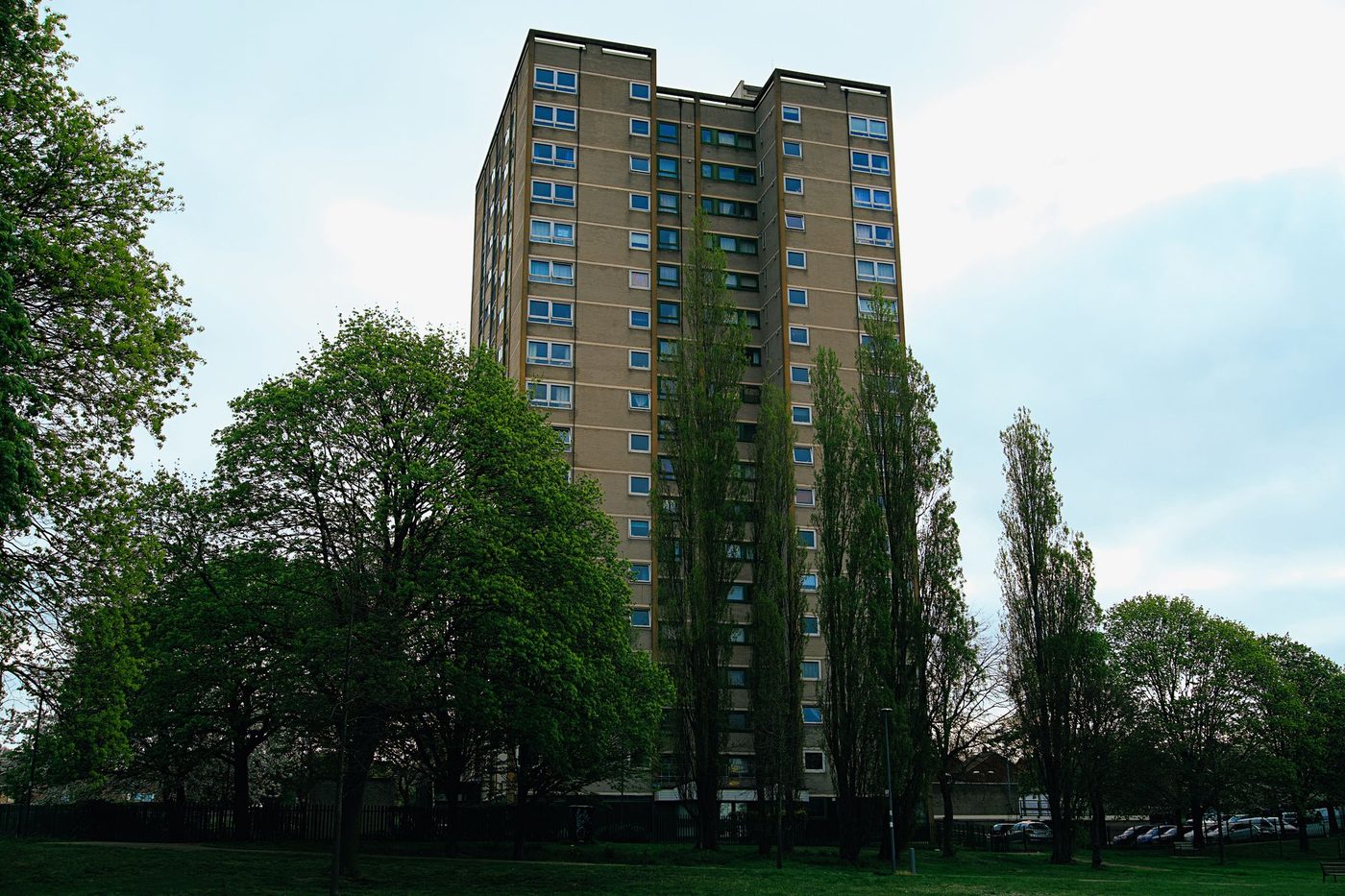
In a Scottish high-rise block, where a pushchair may be left in the hall or on a landing is partly a question of vocabulary. The Scottish Government’s guidance on existing high rise domestic buildings, which carries the title “updated March 2021” on gov.scot, uses a handful of terms that decide the answer, and it uses the word “prams” where this article uses pram and pushchair alike. The guidance says it is for high rise domestic buildings in Scotland. This article reads its Chapter 4 and its Annex 3 on gov.scot, read on 11 November 2026, and is general information, not advice on a particular building.
Five terms the guidance relies on
- High rise domestic building: Annex 3 classes these as buildings that have a floor above 18m in height, where the primary purpose is for living in.
- Common areas: the guidance’s examples are common corridors, stairways and landings.
- Zero tolerance: residents are not permitted to keep any personal items in the common areas, and no exceptions apply.
- Managed use: strictly defined use of common areas, with limited items allowed to control fire risk and ease of ignition.
- Obstruction: the wording of the 1982 Act, covered below, is anything which might obstruct egress from and access to the property in the event of fire.
Why the guidance cares about stairs and landings
Chapter 4 says the most likely place for a fire to start is in a flat, and that fires in common areas can be particularly dangerous but the risk is reduced by effective housekeeping. It says ignition of combustible material in common corridors, stairways and landings gives rise to smoke in escape routes and the possibility of fire spread into flats, and that keeping escape routes clear of obstructions ensures evacuation of residents or access for firefighters is not impeded. It calls this particularly important for single stairway buildings or “dead end” corridors with no alternative means of escape.
Zero tolerance, or managed use: the building chooses
The guidance says there should be a clear policy on whether common areas stay free of combustibles (zero tolerance) or are subject to managed use. It says a zero tolerance policy should apply when there is doubt about residents’ ability to apply managed use, and be adopted where flats open directly onto stairways, or where deliberate ignition is a significant concern. Zero tolerance is defined as covering any personal items.
Under managed use, the guidance suggests conditions such as clearly defined dos and don’ts, and says the approach is likely to need more frequent inspections. Among its conditions is this one: only allow scooters, bicycles and prams if there are suitable storage areas where they will not pose an obstruction. It also says never allow charging of mobility scooters, batteries or other electrical equipment in common areas. Annex 3 describes those responsible for fire safety in a high rise building as typically the building owner, so the policy a block has is the first thing to check.
What the law says about occupiers
Annex 3 sets out the current legal position as section 93(2) of the Civic Government (Scotland) Act 1982: it is the duty of the occupier to keep the common property free of any combustible substances, and anything which might obstruct egress from and access to the property in the event of fire. It says the penalty for an occupier who does not comply can be a fine not exceeding level 3 on the standard scale, a maximum of £1000. The Annex adds that it is the occupiers who are responsible for keeping common areas clear of materials that could constitute a fire risk.
Where prams sit on the risk scale
Annex 3 describes a framework for items left in common areas. It says the assessment should consider whether the area is common property, whether the materials are combustible and whether they could block access to, or escape from, a flat in the event of fire. High risk items are those which can be ignited with ease, such as upholstered furniture or bags of rubbish. Lower risk items “may include prams”, with the note that the list is not exhaustive and items should be considered case by case. The Annex gives as an example of an obstruction a restriction of width to less than 700mm.
For a low risk item, it suggests identifying the owner and asking for removal within a reasonable time. If the owner cannot be found, one course of action is a notice on the item saying that, if it is not moved in a reasonable timeframe, it may be uplifted and stored.
What the guidance does not cover
The Annex says it is a guide to support improved fire safety and is not a requirement. Annex 3 is intended for high rise domestic buildings, though it says the principles of partnership working could be applied in other building types, so a low-rise tenement is outside its stated scope. It does not mention pushchairs. The page title dates it to March 2021, so a block’s own policy or a newer version may differ.
The bottom line
For a Scottish high-rise block, the Scottish Government’s guidance describes two policies, zero tolerance and managed use, and says the building should have a clear policy on which applies. Under managed use it says prams should be allowed only if there are suitable storage areas where they will not pose an obstruction. The Civic Government (Scotland) Act 1982 puts a duty on occupiers to keep common property free of combustible substances and anything which might obstruct egress and access in a fire, with a fine of up to level 3 for non-compliance. Annex 3 lists prams among items that “may” be lower risk, which is not a statement that leaving one is allowed.
Sources
- Practical fire safety: existing high rise domestic buildings, guidance, updated March 2021, Chapter 4: Risk Management, Fire prevention, Scottish Government, read 11 November 2026 (gov.scot)
- Practical fire safety: existing high rise domestic buildings, guidance, updated March 2021, Annex 3: Framework to support the storage, removal and enforced prohibition of materials left in common areas of high rise domestic buildings that constitute a fire risk, Scottish Government, read 11 November 2026 (gov.scot)